
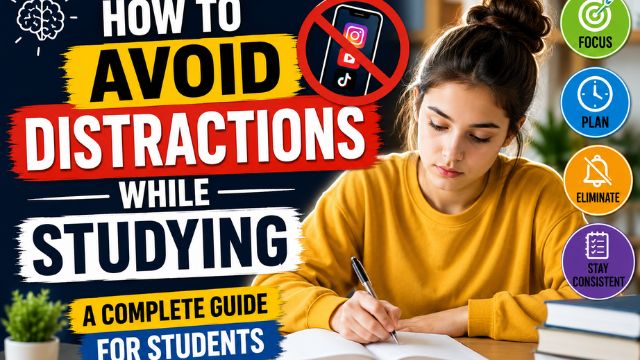
At Hera Public School programs, students are guided to develop focus through structured routines, mindful study practices, and supportive classroom environments. For more insights on maintaining discipline and effective study routines, check out our blog on building discipline and study habits.
Distractions come in two forms: external and internal. External distractions include noise, notifications, and interruptions, while internal distractions are wandering thoughts, stress, or daydreaming. The key is to identify these distractions early and take steps to minimize them, so your study time becomes productive and rewarding. Student concentrating on studies in a quiet, organized environment
Create a Dedicated Study Space
One of the simplest ways to stay focused is to have a dedicated study area. A quiet, well-lit corner signals your brain that it’s time to concentrate. Keep only the items you need—books, stationery, and notebooks—and remove anything unrelated like phones or video games.
To make it even more effective, you can use apps like Forest, which rewards focused work by “growing” a virtual tree while you study. This visual reinforcement makes it easier to stay on task and reduces the temptation to check social media or messages.
It’s much easier to concentrate when you know exactly what you want to achieve in a session. Instead of saying “I’ll study math,” try “I’ll solve 20 algebra problems in 45 minutes.” Breaking tasks into manageable goals keeps the mind focused and motivated.
Using a study schedule or a daily timetable ensures every subject gets attention, especially during your most alert hours. Tools like the Pomofocus timer allow students to follow focused study blocks and short breaks, maximizing attention and retention. At Hera Public School programs, structured timetables are part of the learning culture, helping students stay organized and develop strong study habits.
 Student following a study schedule to stay focused and avoid distractions
Smartphones and computers are powerful tools, but they can also pull your attention away. To avoid distractions while studying, silence notifications, close unnecessary tabs, and use website-blocking apps like StayFocusd or Focus To-Do. Even small steps, such as keeping your phone out of reach, can dramatically improve concentration.
The Pomodoro Technique is a proven strategy for maintaining focus. Study for 25–30 minutes, then take a 5-minute break. This cycle reduces mental fatigue and keeps attention levels high. Students practicing Pomodoro sessions, like those at Hera Public School programs, find it easier to sustain focus without feeling overwhelmed. Student using a timer to focus and avoid distractions during study sessions
Studying non-stop can actually backfire. Short breaks between study blocks refresh the mind and prevent burnout. During breaks, try light stretching, walking, or simply relaxing.
Mindfulness exercises, such as 5-minute meditation or deep breathing, can calm the mind and improve concentration. Students who integrate mindfulness into their routine report better focus and lower stress, which is crucial for avoiding distractions.
 Student practicing mindfulness to improve concentration and reduce distractions
Beyond managing the environment, your mindset plays a huge role in focus. Try these strategies:
Positive Mindset: Approach each session with determination and confidence.
Self-Reward System: Treat yourself for completing study goals to reinforce motivation.
Eliminate Stress: Address anxieties before starting to prevent wandering thoughts.
Combining these internal strategies with environmental adjustments ensures a strong, distraction-free study routine.
Even the best intentions can go off track if you’re not careful. Common pitfalls include:
Multitasking: Trying to study while texting or watching videos reduces retention.
Studying in noisy environments: Crowds, music, or TV can disrupt focus.
Ignoring physical needs: Hunger, thirst, or fatigue increases susceptibility to distraction.
Being aware of these mistakes helps students proactively prevent them.
Several digital tools can help maintain focus:
Forest App: Encourages concentration by growing a virtual tree while studying (Forest).
Pomofocus Timer: Helps manage study sessions using focused intervals (Pomofocus).
StayFocusd: Blocks distracting websites.
Focus To-Do: Combines task lists and timers for better focus.
By using these tools, students can learn how to avoid distractions while studying effectively without relying on constant self-control. Student using productivity apps and organized desk setup to minimize distractions
Role of Parents and Schools
Parents and teachers are key partners in helping students stay focused. Parents can provide quiet spaces, reinforce study schedules, and model disciplined habits. Meanwhile, schools like Hera Public School programs create structured classrooms, integrate mindfulness, and teach focus techniques so students can minimize distractions naturally.
Mastering how to avoid distractions while studying is critical for academic success. By setting up a dedicated study area, limiting digital interruptions, following structured schedules, taking breaks, practicing mindfulness, and using productivity tools like Pomofocus and Forest, students can dramatically improve concentration and learning efficiency.
For students and parents looking for a supportive environment that emphasizes focus, discipline, and effective study strategies, explore Hera Public School programs.